The Label Isn’t the Factory
Walk down the pet food aisle and you’ll see dozens of brands. Some are flashy, some are plain, some promise to be just like the expensive stuff for half the price. Here’s the part most shoppers never think about: a huge number of those bags come out of the same handful of facilities.
This isn’t a scandal. It’s just how packaged food works. A retailer or a brand owner decides they want a product. They don’t necessarily build a factory for it. Instead, they hire a manufacturer who already has the equipment, the recipes, and the regulatory know-how to produce it for them. That manufacturer is called a co-packer, short for contract packager.
Why Co-Packing Dominates Pet Food
Building a pet food plant is expensive. You need extrusion equipment for kibble, retort systems for canned food, and strict quality controls because this is still food animals eat every day. Most companies, even ones that look big on a shelf, don’t want to carry that overhead.
So they partner with a co-packer instead. The co-packer runs the recipe the brand provides, or sometimes offers their own base formula that gets tweaked slightly for each client. The bag gets a unique label, a unique name, maybe a different kibble shape. Underneath, the base formulation and the factory floor can be nearly identical to a competing bag sitting right next to it.
This explains something that confuses a lot of pet owners: why two bags with wildly different prices and branding sometimes have suspiciously similar ingredient lists. It’s not always a coincidence. It can be the same production line running two labels in the same shift.
How to Spot a Co-Packed Product
You won’t find the manufacturer’s name in big letters. Companies that use co-packers generally don’t advertise it. But there are a few clues worth checking.
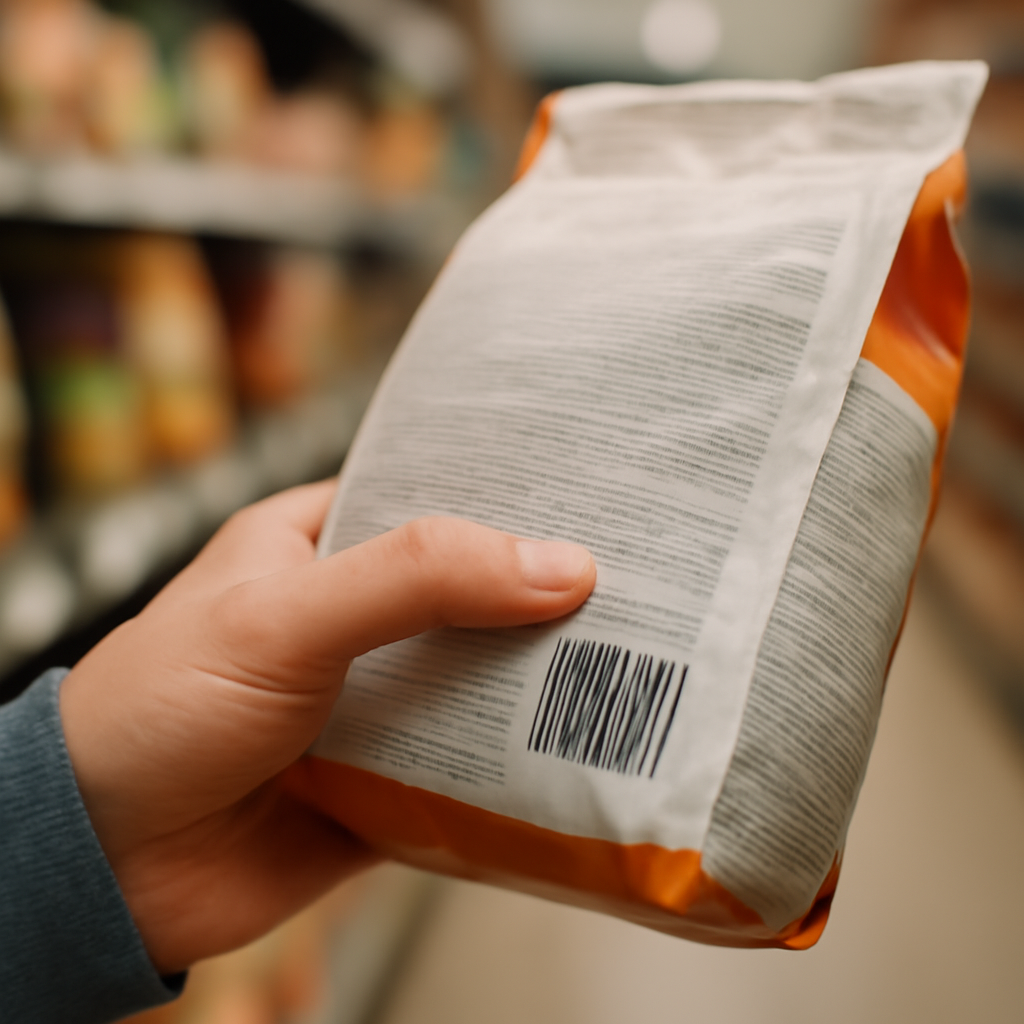
- Check the fine print. Many bags list a manufacturing code or a small ‘distributed by’ line instead of ‘manufactured by.’ That wording difference matters. ‘Distributed by’ often means the company selling it didn’t make it.
- Look for a plant code near the barcode. Pet food packaging often includes a batch or facility code required for recalls. It won’t name the factory outright, but it’s a sign the product passed through a third-party production system.
- Compare ingredient order across brands. If two budget brands list their first eight ingredients in the exact same order, that’s a strong hint they share a formula base.
- Search for the company’s manufacturing footprint. Some brand websites mention owning their own plants. If a company says nothing about where it manufactures, that silence is itself informative.
Store Brands Lean on This Model Heavily
Retailer-owned pet food lines are some of the most common co-packed products out there. A grocery chain wants a house brand of dog food because it’s cheaper to sell under its own name and keeps shoppers loyal. The chain doesn’t build a kibble plant. It signs a contract with an existing pet food manufacturer, sets a price target and a few ingredient requirements, and the manufacturer handles the rest.
This is exactly why store-brand pet food can vary so much in quality from one chain to another, even when the packaging looks similarly generic. Different retailers are working with different co-packers, or the same co-packer running different recipe tiers depending on the budget.
Is This a Bad Thing?
Not necessarily. Co-packing lets smaller or newer pet food companies compete without raising millions for a factory. It lets retailers offer lower prices. Some co-packers are highly specialized and produce excellent formulas across multiple brands.
The issue isn’t the practice itself. It’s the lack of transparency. Shoppers assume a brand name tells them something meaningful about who made the product and how. Often it doesn’t. The name on the bag is a marketing decision. The real manufacturing story is usually a layer deeper.
What This Means for Your Next Shopping Trip
If you’re loyal to a specific pet food brand because of its ingredient sourcing or quality claims, it’s worth checking whether that brand owns its manufacturing or outsources it. If you’re trying to save money, understanding co-packing can actually work in your favor. A cheaper bag made in the same facility as a pricier one, using a similar base recipe, might be a smarter buy than the label suggests.

The pet food aisle, like most consumer goods aisles, is less about who makes things and more about who sells them. Knowing the difference is the first step to shopping with your eyes open instead of just trusting the packaging.